By Brian B. French
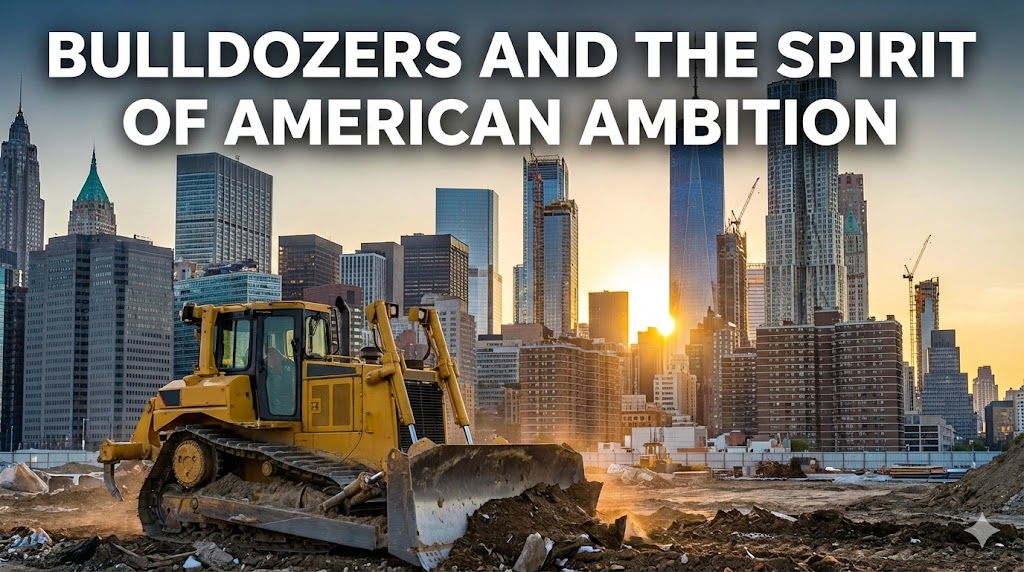
There is a machine that does not get enough credit for civilizational progress. It is loud, it is blunt, and its purpose is destruction. But the bulldozer — and the spirit it represents — is among the most powerful forces for human advancement ever devised. To understand why, look no further than the island of Manhattan.
A Small Dutch Port on a Big Empty Island
In the early 17th century, when the Dutch established New Amsterdam at the southern tip of Manhattan, they found what thousands of other places around the world offered: a sheltered harbor, navigable rivers, fertile land, and a geography almost perfectly suited for commerce. They built a fort. They built a wall — which would give Wall Street its name. They built one-story wooden houses along muddy lanes, and they left most of the island to the forests and the farms.
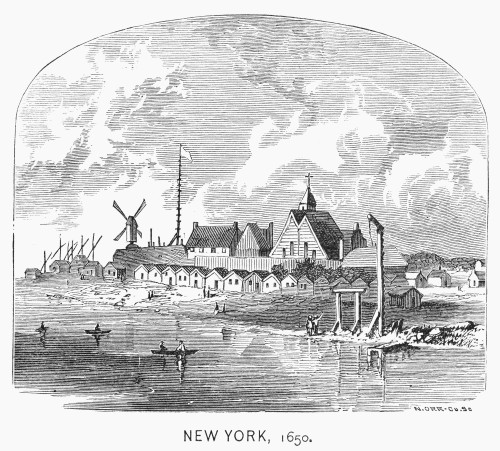
By the time the British took over and renamed it New York, the settlement was still modest. A few hundred buildings huddled near the tip of the island, with miles of wilderness stretching to the north. The geography was exceptional. The ambition, at that moment, was not.
A City Built to Three Stories — and No Higher
Fast-forward to 1850. New York had grown enormously. Its population had swelled past half a million. The grid laid out by the Commissioners’ Plan of 1811 had been mostly filled in, stretching up the island block by block. By the standards of the age, Manhattan was developed — a dense, bustling, commercially vibrant city.
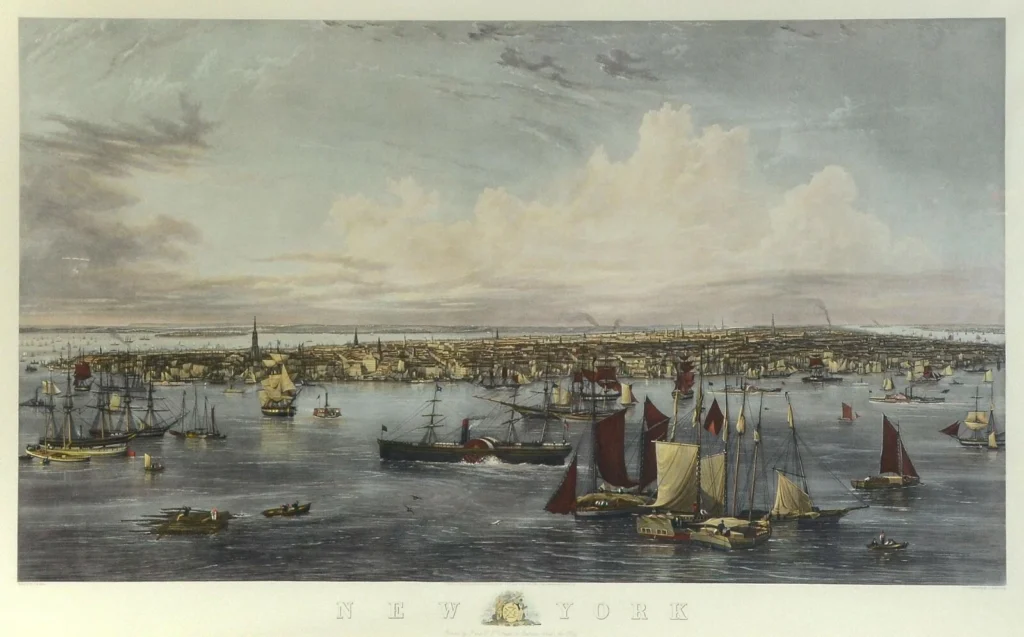
And yet, look at the skyline. Every building stood two or three stories tall. The tallest structures on the entire island were the steeples of the churches. Trinity Church, completed in 1846 at the corner of Broadway and Wall Street, rose 281 feet and was briefly the tallest building in the Western Hemisphere. It was a house of God. Everything else was barely taller than the trees.
If you had drawn a map of Manhattan in 1850 and colored in every developed parcel, you would have covered nearly the whole island. But “developed” meant something very different then. The buildings were small, the materials were modest, and the ambitions of the men who built them were bounded by the technology of their time.
The Bulldozer Changes Everything
Then came the great machines. Steel. The elevator. Reinforced concrete. The steam shovel and, eventually, the bulldozer. And with them came a question that would define New York and, in many ways, define America: why keep what you have when you can build something better?
This is the virtue of the bulldozer. It does not sentimentalize. It does not ask whether the building being cleared was perfectly adequate, or whether someone’s grandfather built it, or whether its bricks were laid with great care a generation ago. It asks only one question: what should stand here now?
And so Manhattan was remade. Not once. Not twice. But in many neighborhoods, three, four, five times over. The wooden houses of the colonial era gave way to Federal-style brick rowhouses, which gave way to cast-iron commercial buildings, which gave way to steel-frame towers, which gave way to skyscrapers that scraped the clouds. Every generation looked at what the previous generation had built and said: we can do better. And then they did.
The Same Geography, a Different Spirit
Here is the remarkable thing. There are thousands of places in the world with geography comparable to Manhattan — islands and peninsulas with deep natural harbors, at the confluence of major waterways, positioned at the nexus of trade routes. Some of them became cities. Very few became New York.
The difference was never the land. The land was given. The difference was the willingness — the eagerness, even — to treat what existed as raw material for what could exist. The Dutch who first built here could not have imagined the city of 1850. The New Yorkers of 1850 could not have imagined the city of 1930. The New Yorkers of 1930 could not have imagined what stands today. And that is precisely the point. Each generation refused to be constrained by the imagination of the last.
Across America there are river towns and harbor towns and crossroads towns that had everything Manhattan had and made far less of it. They preserved their old buildings, not because the buildings were extraordinary, but because tearing them down required a decision, and decisions require courage. It was easier to let things stand. And so they stand — two and three stories tall, monuments not to heritage but to hesitation.
The Courage to Start Over
What New York understood, and what the bulldozer embodies, is that a city is not a museum. It is a living organism, and living organisms grow or they die. The willingness to clear ground — to look at a perfectly functional two-story building and say that something twelve stories tall should stand in its place — is not vandalism. It is vision.
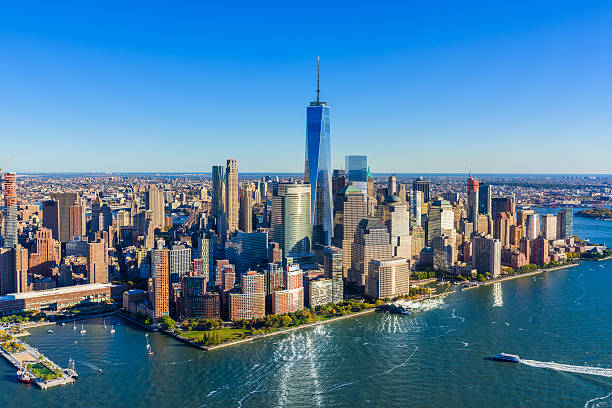
It takes courage to demolish what exists. There will always be voices arguing for preservation, for continuity, for the sentimental value of the old. Those voices are not wrong to speak. But a city that always listens to them will eventually become a relic — picturesque, perhaps, but no longer alive. No longer the place where the future is being built.
New York listened to those voices sometimes, and well it should have. But more often, it listened to another voice — the voice that said: the land beneath this building is worth more than the building. The future is worth more than the past. Let us begin again.
Other Florida News and Business Stories:
• Florida’s Small Businesses Struggle to Fill Open Positions Amid Labor Shortage, NFIB Study Reveals
• South Florida Water Rights Law Firm
• Tampa St. Petersburg Govt. Administrative Law with Nason Yeager
• Schools for Construction Training South Fl / Miami
• Digital Marketing in Naples Florida
The Spirit of America
This is, in the end, the American spirit in its purest form. Not the preservation of what was, but the relentless construction of what could be. The willingness to look at yesterday’s achievement and treat it as tomorrow’s foundation — or tomorrow’s demolition site. The faith that what comes next will be better, and the energy and capital and ambition to make it so.
The bulldozer did not build New York. The engineers and architects and ironworkers and financiers built New York. But the bulldozer cleared the ground for them. It made room. It said, again and again, in every decade, on every block: this is not finished. We are not done here. We can do more.
And so they did. And so the island rose, story by story, decade by decade, from a Dutch fort and a collection of one-story houses to the most recognizable skyline in the history of human civilization.
That is the virtue of the bulldozer. It believes in what comes next.
About the Author