By Brian French
Don’t want to read? Just listen (hit play)
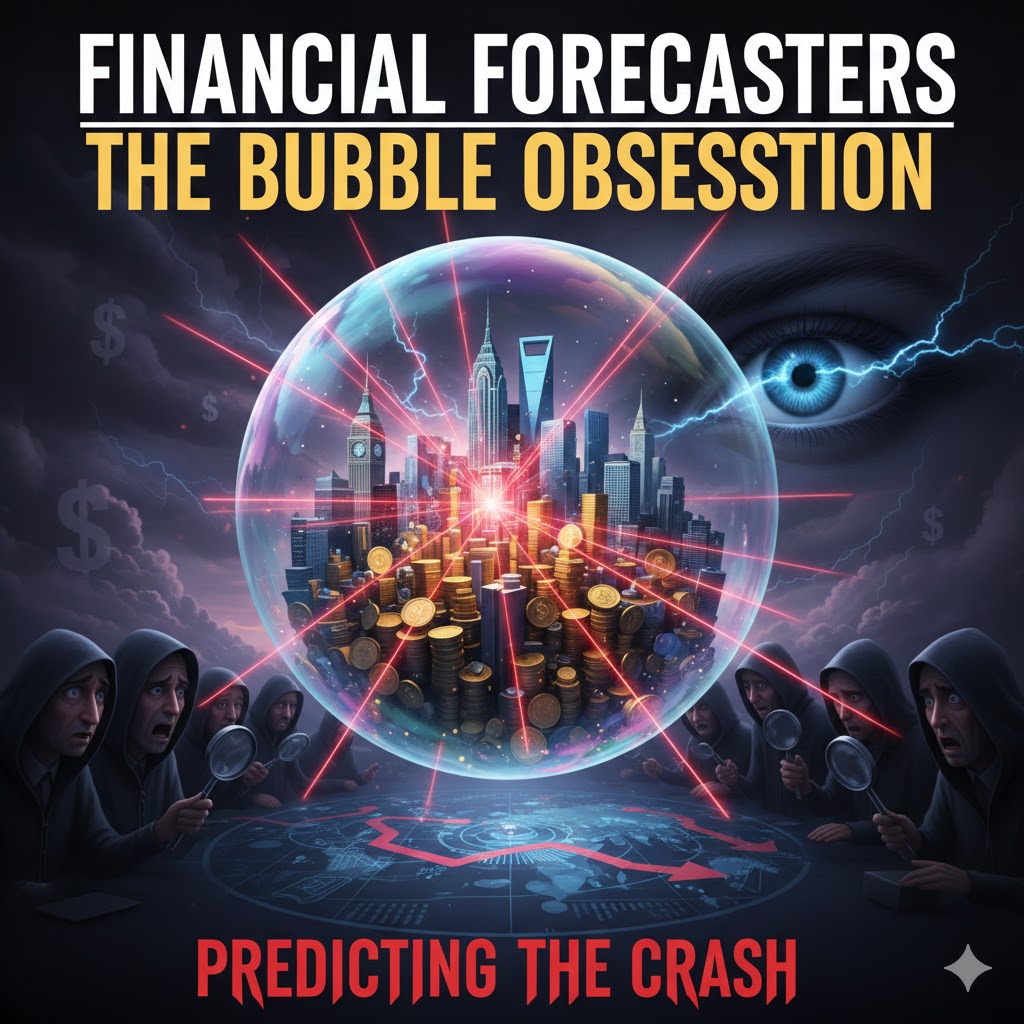
Every bull market has its prophets of doom. As markets climb and new technologies emerge, a familiar chorus of financial forecasters steps forward to warn that disaster lurks around the corner. These perennial pessimists have become a fixture of modern finance, their predictions of imminent bubbles filling headlines and cable news segments with clockwork regularity. Yet history reveals an uncomfortable truth: they’re almost always wrong.
The phenomenon is so predictable it’s almost comical. When the internet was transforming commerce in the late 1990s, experts warned of catastrophic overvaluation. When social media emerged in the mid-2000s, skeptics declared it a fad built on nothing. When cryptocurrencies appeared, economists lined up to predict their imminent collapse. Now, as artificial intelligence reshapes entire industries, the doomsayers have found their latest target.
The track record of these forecasters is remarkably poor. Economist Paul Samuelson once quipped that the stock market had predicted nine of the last five recessions. The joke captures a deeper truth about professional pessimists. By constantly predicting crashes, they occasionally get lucky when markets inevitably correct, allowing them to claim vindication while conveniently forgetting their dozens of failed predictions.
Consider some notable examples. In 2010, prominent economists warned that quantitative easing would trigger hyperinflation and economic collapse. It didn’t happen. In 2013, Bitcoin skeptics declared the cryptocurrency would be worthless within months. Despite volatility, it has survived over a decade. In 2016, some forecasters predicted Trump’s election would crash markets. Instead, markets initially rallied. Brexit was supposed to trigger immediate financial catastrophe in Britain. The outcome was far more nuanced.
The pattern repeats with every technological revolution. The railroad boom of the 1840s was declared unsustainable. The automobile industry in the early 1900s was dismissed as a passing fancy. Television, personal computers, mobile phones—each faced predictions of market collapse and economic ruin. Yes, some of these innovations experienced temporary bubbles, but the underlying technologies proved transformative and created genuine long-term value.
This brings us to artificial intelligence, the current target of bubble warnings. Critics point to high valuations, substantial capital expenditures, and speculative fervor as evidence of impending collapse. But this analysis ignores several fundamental differences between AI and historical bubbles.
First, AI is already generating measurable productivity gains across industries. Unlike the dot-com era, when companies with no revenue model commanded billion-dollar valuations, AI applications are demonstrably improving efficiency, reducing costs, and creating new capabilities. Healthcare diagnostics are becoming more accurate. Software development is accelerating. Customer service is becoming more responsive. These aren’t hypothetical future benefits—they’re happening now.
Second, the infrastructure being built has real utility regardless of individual company success. During the railroad bubble of the 1840s, many companies failed, but the tracks they laid enabled decades of economic growth. Similarly, investments in AI computing infrastructure, data centers, and research will provide lasting value even if some current market leaders stumble.
Third, adoption is occurring at an unprecedented pace. ChatGPT reached 100 million users faster than any consumer application in history. Businesses are integrating AI tools at remarkable speed. This isn’t speculative interest; it’s genuine demand driven by tangible benefits.
Fourth, the technology has broad applicability across sectors. Bubbles typically involve narrow applications or single industries. AI is being deployed in healthcare, finance, manufacturing, education, transportation, scientific research, and countless other fields. This diversification reduces systemic risk.
Fifth, major tech companies investing heavily in AI already have profitable core businesses generating substantial cash flow. They’re not unprofitable startups burning through venture capital. Apple, Microsoft, Google, and Amazon can afford to invest in AI development while maintaining financial stability.
None of this means AI investments are risk-free or that valuations are always justified. Market corrections will occur. Some companies will fail. Certain applications will disappoint. But these normal market dynamics don’t constitute a bubble in the traditional sense.
The real danger isn’t that markets are irrationally exuberant about AI. It’s that constant warnings of bubbles might cause investors, policymakers, and businesses to underinvest in genuinely transformative technology. Fear of repeating past mistakes can become its own mistake.
Financial forecasters who constantly predict disaster serve a purpose. They provide a counterweight to uncritical enthusiasm and can help identify genuine risks. But their track record demands skepticism. When every innovation prompts dire warnings, and those warnings rarely materialize, we should question whether the methodology itself is flawed.
Perhaps the lesson is simpler: transformative technologies create real value, even when markets temporarily overshoot. The doomsayers will continue their warnings with every new innovation. They’ll occasionally be right about short-term volatility. But history suggests that betting against human ingenuity and technological progress is a losing proposition over the long term.
Florida News and Press Releases:
• Public Relations Firm in Miami Florida
• Florida news article marketing
• Don’t Blame the Mayflower Settlers for the Decline of Native Americans
• Why Your Florida Website Struggles to Rank on Google
• Beyond Boilerplate: How AI Unlocks Your Real Voice
The AI revolution will have its stumbles and corrections. But calling it a bubble reveals more about the forecaster’s bias than about the technology’s fundamental value. The pessimists have been wrong before. They’re likely wrong again.
About the Author