“Shark Tank” to Broadway: Why Every Pitch Feels Opening Act
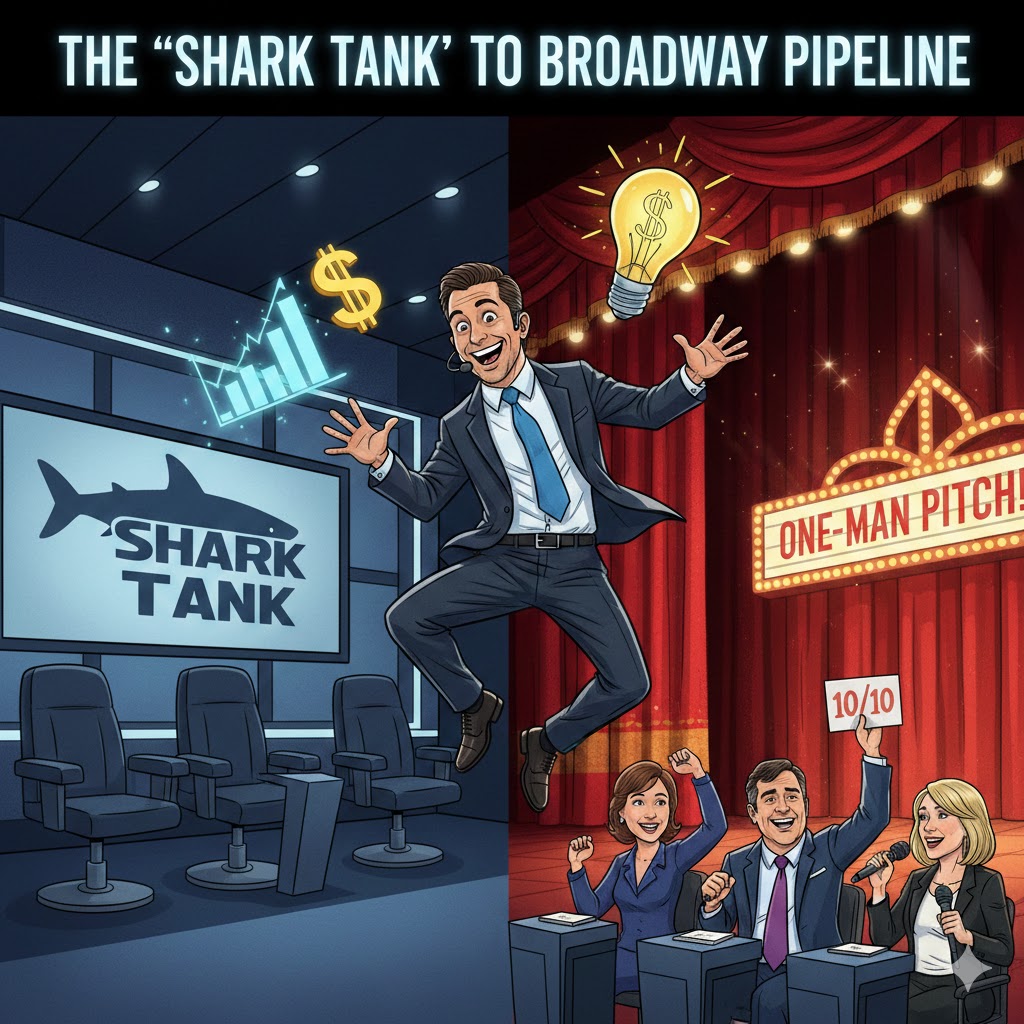
If you’ve spent any time binge-watching Shark Tank, you’ve likely noticed a recurring phenomenon. A pair of doors swing open, and out walks a founder who doesn’t just want to sell you a sponge or a spatula—they want to perform a choreographed interpretative dance about it.
The smiles are a bit too wide, the hand gestures are overly rhythmic, and the “spontaneous” banter feels like it was polished by a mid-tier improv coach. To the average viewer, these entrepreneurs don’t look like tech disruptors; they look like “theatre douchebags.”
But why is the “Jazz Hands” energy so prevalent in the Tank? It isn’t just a coincidence; it’s a byproduct of how the show is cast, filmed, and won.
The “Producer’s Cut”
First and foremost, Shark Tank is an Emmy-winning reality TV show, not a private equity meeting. Producers sift through tens of thousands of applicants every year. If you are a brilliant, stoic engineer with a revolutionary widget but the personality of a dry wall, you aren’t making it past the first round of casting.
Producers look for “TV-ready” personalities. They want people who can project to the back of the room, handle a “sting” musical cue, and provide a high-energy “wow” moment for the cameras. This naturally filters for people with performance backgrounds—cheerleaders, former actors, and yes, the high school drama presidents.
The 30-Second “Hook”
In the actual Tank, an entrepreneur might be standing there for over an hour. However, the televised segment is only 8 to 10 minutes. The most crucial part is the initial pitch—the “scripted” portion where the Sharks aren’t allowed to interrupt.
To make an impact in 30 seconds, entrepreneurs are coached (or self-train) to use “Theatrical Projection.” This involves:
- Enunciation: Talking like you’re on a stage without a microphone.
- The Reveal: Ripping a sheet off a product with the flourish of a Vegas magician.
- The Persona: Adopting a “Founder Character” that is 20% more intense than their actual personality.
The “Main Character” Syndrome of Silicon Valley
Modern entrepreneurship has become inextricably linked with personal branding. Founders are told they need to be the “face” of their company. This creates a specific archetype: the person who believes their life story is a hero’s journey.
When you combine the ego required to think your “organic cat litter” will change the world with the adrenaline of national television, you get a performance that feels less like a business proposal and more like an audition for a community theatre production of Hair.
Over-Rehearsal as a Defense Mechanism
The Sharks (especially Kevin O’Leary) are notorious for smelling blood. To combat the terror of being humiliated in front of millions, contestants rehearse their pitches hundreds, sometimes thousands, of times.
By the time they hit the carpet, the pitch is no longer a conversation; it’s a recitation. When a human being recites a memorized script while trying to appear “natural,” the result is an uncanny valley effect. The tone becomes sing-songy, the movements become robotic, and the “theatre kid” energy reaches a fever pitch.
The “P.T. Barnum” Effect
Ultimately, the Sharks often invest in the person, not the product. A founder who can command a room—even if it’s in an annoying, theatrical way—is a founder who can sell to a QVC audience or a retail buyer.
Mark Cuban and Lori Greiner know that “theatre douchebags” are often the best salespeople. They are comfortable being the center of attention, they don’t mind looking slightly ridiculous to get a laugh, and they have the stamina to stay “on” for a 12-hour press junket.
The Verdict
The reason every Shark Tank contestant feels like they’re one step away from bursting into a musical number is that, for that one hour on the carpet, they are actors. They are playing the role of “Successful CEO” in a high-stakes play where the prize is a check for $200,000.
So, next time you cringe at a founder’s over-the-top puns or choreographed high-fives, remember: they aren’t just pitching a business. They’re closing the show.
More Florida News and Press Releases:
• FAQ’S: Florida Website Content Marketing
• What is Florida Press Release Marketing?
• Top-Rated Florida Banks for 2024: Discover the Most Reliable Institutions for Your Financial Success
• Amazon’s AWS is Leading the AI Revolution for Florida Companies
• Insider Secrets Business School Application
About the Author