The Enduring Value of Lineage Societies
By Brian Britton French
In an age of digital connections and fleeting interactions, lineage societies like the General Society of Mayflower Descendants and the Daughters of the American Revolution offer something increasingly rare: a tangible link to the past and a meaningful bridge to the future. While some might view these organizations as merely social clubs for history enthusiasts, joining a lineage society can profoundly shape how we understand ourselves, our families, and our place in the broader story of human experience.
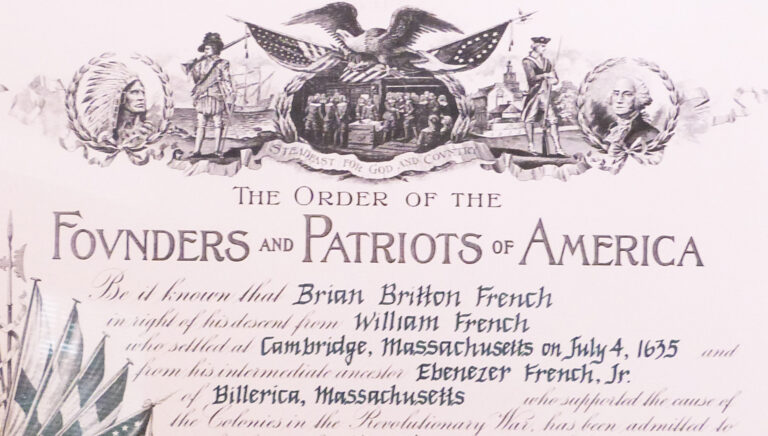
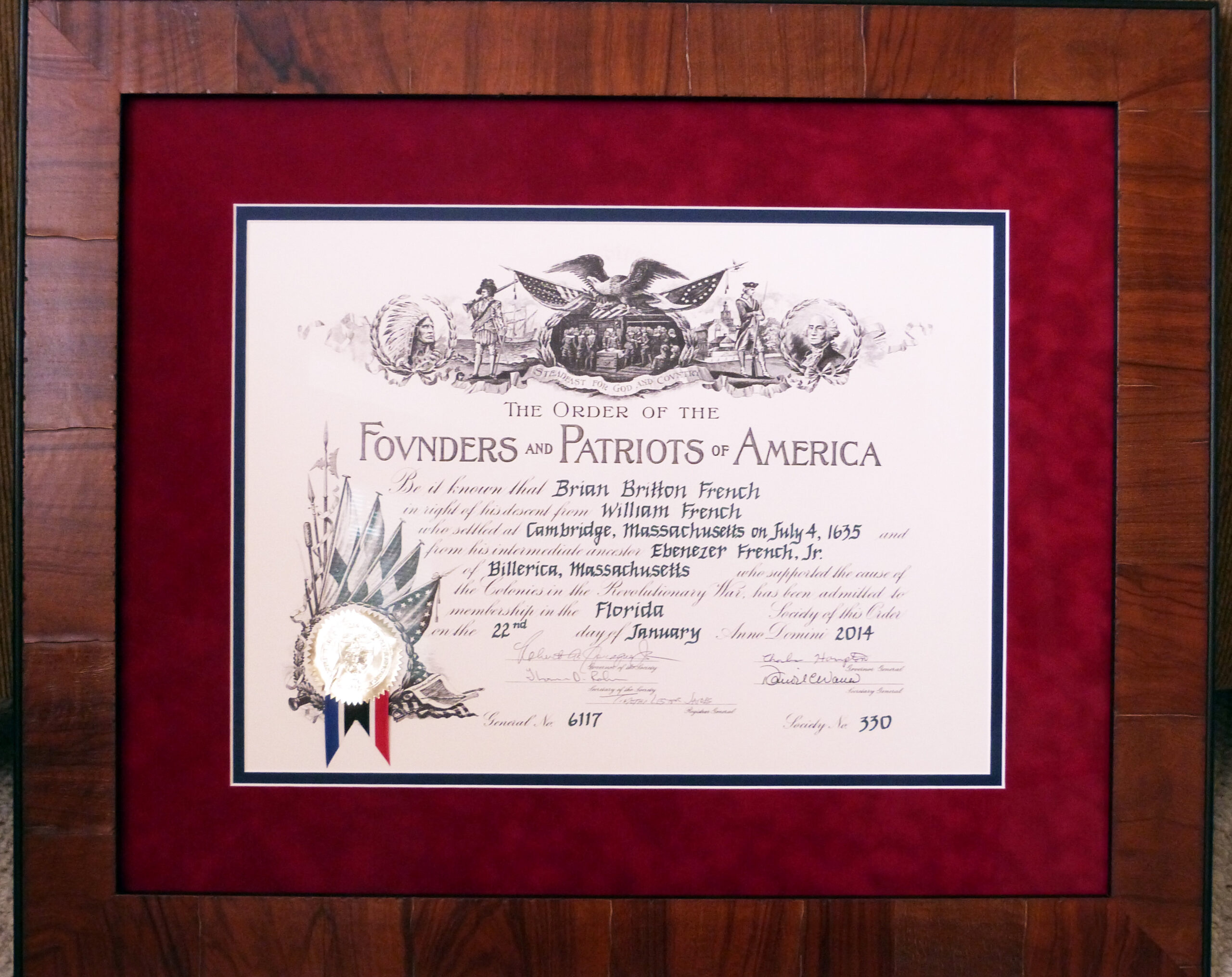
At its core, the journey to membership becomes an education in itself. The research required to prove lineage—tracing family lines through centuries of records, documents, and historical accounts—naturally draws members into the wider currents of American and world history. What begins as a search for a single ancestor’s birth certificate can evolve into discovering that your great-great-great-grandfather fought at Bunker Hill, or that your fourth-great-grandmother endured a brutal outbreak of yellow-fever.
These personal discoveries transform abstract historical events into intimate family stories. Suddenly, the American Revolution isn’t just something that happened in textbooks; it’s something your family lived through. This personal connection to history often ignites a passion for learning that extends well beyond one’s own family tree, fostering a deeper appreciation for the complex forces that shaped our modern world.
These stories, once uncovered, become precious gifts to share with family and friends. Imagine gathering relatives around a table and revealing that you’ve traced the family back to a Mayflower passenger, or that an ancestor fought in the Civil War. These narratives give families a sense of continuity and shared identity that can strengthen bonds across generations. Children learn that history isn’t distant or irrelevant—it’s woven into the fabric of who they are. Friends gain insight into the experiences that shaped your family’s values and traditions. In sharing these stories, we keep the past alive and relevant.
Perhaps most profoundly, researching our ancestors cultivates deep gratitude and humility. Learning about the challenges our forebears faced—whether crossing the Atlantic in cramped, disease-ridden ships, surviving harsh frontier conditions, enduring the trauma of war, or rebuilding lives after devastating loss—puts our own difficulties into perspective.
More Florida Online News:
• Florida News and PR Articles Links with Florida Website Marketing
• Florida Based Carnival Cruises Line: Turns 50
• Expert Miami Florida Website SEO
• Loyal Source Government Services Earns Prestigious Spot as a Central Florida Top Workplace for 2024
• FloridaCommerce Unveils Disaster Unemployment Assistance
When you discover that your ancestor walked hundreds of miles to claim land in an unsettled territory, or that a great-grandmother raised six children alone after her husband died young, your own struggles may seem more manageable. This understanding doesn’t diminish our challenges but rather connects us to a legacy of resilience. It reminds us that hardship has always been part of the human experience, and that we carry within us the strength of those who persevered before us. This awareness naturally makes us more gracious—more patient with ourselves and more compassionate toward others facing their own battles.
Lineage societies also address a significant challenge many adults face: the difficulty of making meaningful friendships later in life. As we age, the natural social structures of school and early career fade, and forming new connections becomes increasingly difficult.
Lineage societies provide a ready-made community of individuals who share not just a general interest in history, but often similar values, curiosities, and a respect for heritage. The meetings, events, and collaborative projects these organizations sponsor create regular opportunities for interaction and the development of genuine friendships. These aren’t superficial connections based on fleeting trends, but relationships rooted in shared appreciation for the past and commitment to preserving it for the future. For many members, the friendships formed through lineage societies become some of the most rewarding relationships of their adult lives.
Beyond the personal benefits, joining a lineage society creates a lasting legacy. When you complete the rigorous documentation process to prove your lineage, you’re not just securing your own membership—you’re establishing a verified historical record that future generations of your family can build upon.
A great-great-grandchild searching for family history decades from now will find your carefully compiled documentation, saving them countless hours of research and providing them with a verified path back through the generations. That descendant might feel lost, searching for identity and meaning, and your work could provide them with the connection and inspiration they desperately need. In this way, your membership becomes a gift to people you’ll never meet, but who will share your blood and perhaps your curiosity about where they came from.
Finally, and perhaps most meaningfully, lineage societies give purpose to the lives of our ancestors and to our own. Each generation that has come before us lived full lives—they loved, struggled, hoped, and persevered. Yet without someone to remember them, their stories fade into obscurity, as if they never existed at all.
By researching and documenting their lives, we affirm that their existence mattered, that their choices and sacrifices contributed to something larger than themselves: us. In turn, our own lives gain deeper meaning when we see ourselves not as isolated individuals, but as links in a great chain connecting past and future. We become stewards of our family’s story, preserving it for descendants who will one day ask the same questions we’re asking now: Where did I come from? Who were my people? What legacy do I carry forward?
Joining a lineage society is far more than adding a line to your bio or gaining access to exclusive events. It’s an investment in understanding—of history, of family, of ourselves. It’s a commitment to gratitude, to community, and to leaving something valuable for those who come after us.
In a world that often feels disconnected from the past and uncertain about the future, lineage society organizations offer us the chance to stand firmly in the present while honoring where we’ve been and thoughtfully considering where we’re going. They remind us that we’re part of something greater than ourselves, and that our lives, like those of our ancestors, will echo forward through generations yet to come.
About the Author